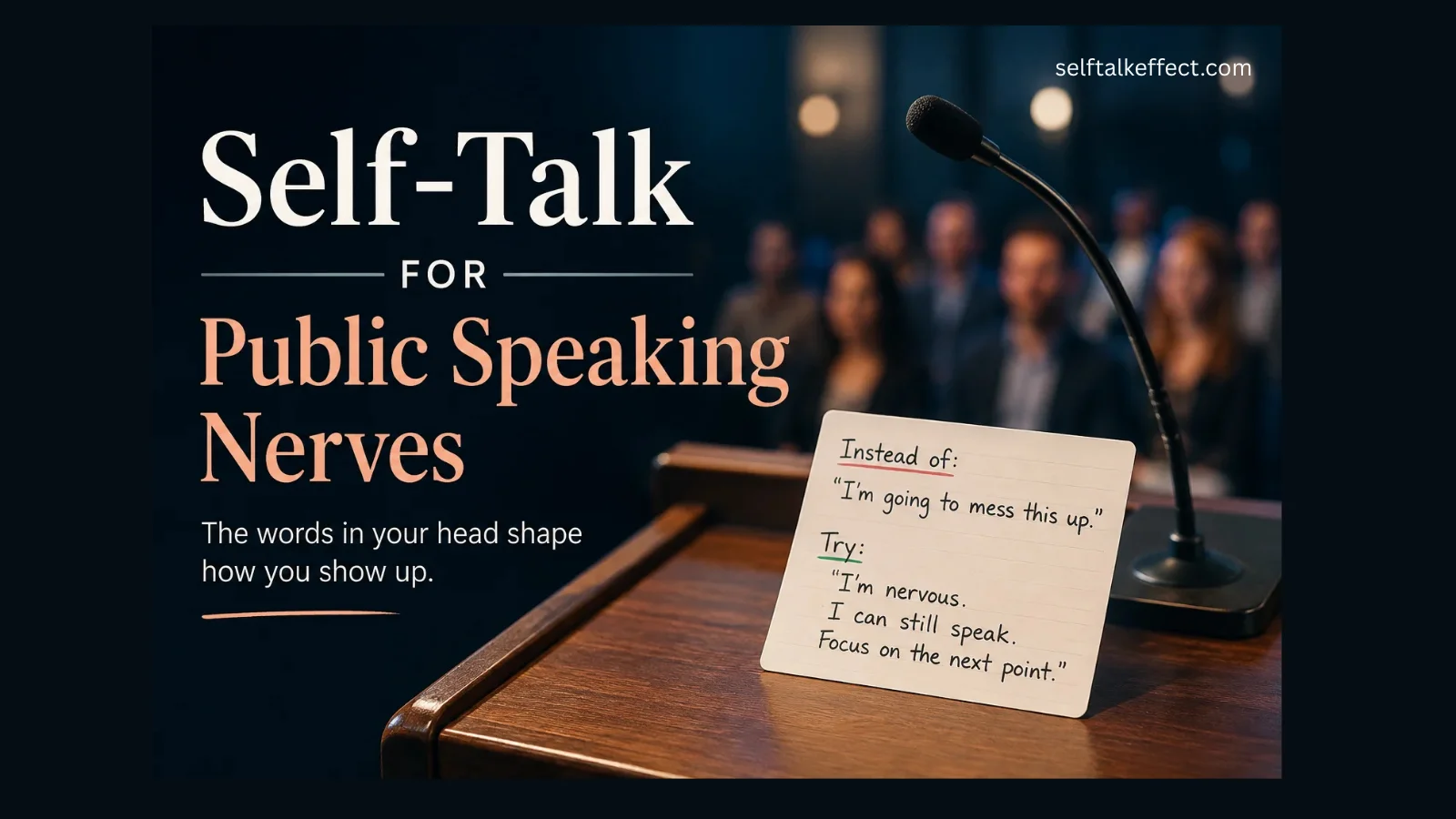
You made a mistake and now the inner commentary won't stop. I know how that feels, I've been there. Even now, all these years later it is easy for me to still let my inner critic rule - but not for very long.
It all starts when you did something. Maybe you sent the wrong file or forgot an appointment, or said something you wish you could take back. As if the mistake wasn't bad enough now you also have the running commentary that just won't let it go.
That inner critic of yours really isn't a flaw, it's actually a habit. That language you use has just grown into an automatic pattern and the good news is, it can be interrupted the same way it started, one sentence at a time.
Why the mistake isn't really the problem
Here's the usual cycle that can happen after you mess something up. What happened (the event) that can be over in seconds. What comes next, the sentence you tell yourself about it, well that's the thing that does more harm and more work than the mistake ever did.
"I always do this" runs longer and hits harder than "I did this once" because one is a fact and the other is a life sentence that you hand yourself, in the moment you least need one.
Self-talk shapes emotion, emotion shapes what you do next, and what you do next shapes the result. That is the whole chain and it runs whether you're paying attention to it or not. It becomes so natural and so normal that the sentence just fires and takes over.
My own inner critic used to sound like a very unkind version of me, narrating my mistakes back at me in real time, sometimes years after they happened. I didn't appreciate how harsh it was until a life coach asked me to repeat one of those sentences out loud to her face. I couldn't do it. Hearing it said to another person made obvious what saying it silently to myself had been hiding. I would never talk to anyone else in that way and yet I hadn't noticed I was doing it to me.
How the sentence changes what happens next
There are two things worth understanding here.
The first, is that naming a feeling accurately turns the volume down on it and when you hear it out loud is also decreases the intensity of it. I did years of training with Landmark Education and we were taught what you "What you resist persists and what you look at disappears" - so stop resisting it and go ahead and say it out loud. Name it and watch the hold it has on you loosen over time.
The second is called reframing. The event itself doesn't change, but the meaning you attach to it does, and that meaning is what decides what happens next. "I sent it wrong" can sit inside more than one frame. The negative self-talk will tell you "I'm careless" and the reframe will tell you "I now know exactly what to check before I hit send." Same mistake, same email and two completely different ways of thinking that will impact your mood.
Neither of these are about pretending the mistake never happened or forcing yourself to feel ok about it. It is really about swapping the sentence that keeps you stuck for one that lets you breathe and move forward.
What to actually say
What you learn through the Self-Talk workbooks and toolkit is to have one sentence ready before the moment arrives. We all make mistakes, chances are you will make another, so be ready for it by having an alternative way of thinking.
For example you might choose:
- One mistake does not define me.
- I can repair without self-punishment.
- This feeling will pass through me.
These are all six word phrases that are short enough to say out loud without it feeling like a performance. They are also specific enough to actually mean something. The goal here is not to feel anything about the mistake. It's to stop the sentence that turns one bad moment into a character verdict.
It can be as simple as this:
You notice the sentence you're already telling yourself. You say it out loud or reframe it so you don't attach meaning to it.
"One mistake does not define me" and then you take the next small action, whatever that is here.
That really is the whole reset and its what you learn to do via the workbooks. Its not complicated. It's just not automatic yet.
An exercise to get you started
Think of the last mistake that stuck with you longer than it should have and write it down. Write out the exact sentence you told yourself about it in that first minute. Then write out the six-word version next to it. Notice the difference in how each one makes you feel when you read it back.
The best gift you can give yourself is not to try to never make a mistake, but to get better at talking yourself out of feeling bad about them. That way you get better at not letter one sentence turn a mistake into a story about who you are. That's the whole shift, and its available for the next time this happens, which it will, because it happens to us all.
If you want the fuller version of this, my free guide Notice Your Negative Self-Talk walks through how to catch the sentence before it runs and ruins the rest of your day.