About The Self Talk Effect

I'm Diane - the person I wish I'd had when I was 30.

For most of my 20s and early 30s, one small thing could take over an entire day for me. A comment in a meeting or a mistake I'd already fixed. My mind would replay it, exaggerate it, and hand me a mood I hadn't chosen. I didn't have a word for it then. I just knew I was tired of feeling like a passenger in my own reactions.

Now, I'm a certified life coach and NLP Master Practitioner, and I've spent over two decades studying how language shapes emotion, behaviour, and identity, not as an academic exercise, but because I needed to understand what was happening in my own head first. Everything inside The Self-Talk Effect comes from that combination: real training, and a pattern I lived through and rebuilt myself.

What You'll Find Here

Guided PDFs, a companion self-coaching tool, and a straightforward method - Notice, Refine, Repeat - you can use the moment your mind starts to escalate something small into something big. If you've ever known exactly what you should do and still couldn't make yourself do it, you're not broken, and you're not alone in it. You just haven't had the right question yet. That's what I'm here for.
[See The Guides →]

About The Self Talk Effect

The Problem Most People Miss

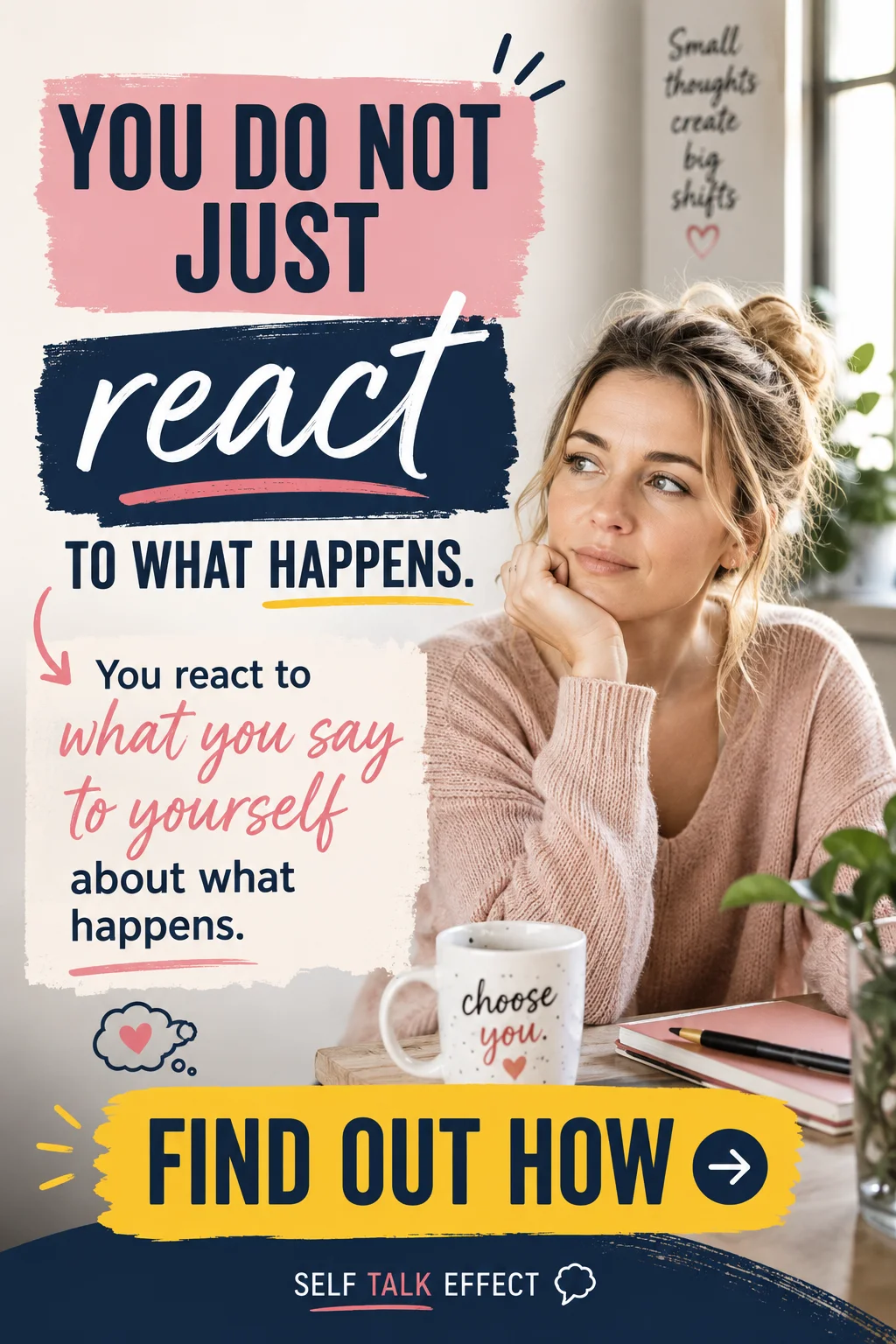
Most people believe stress comes from what happens around them - a mistake at work, a tense conversation or a plan that falls apart. But something happens before the stress reaction begins. You say something to yourself about what just happened.

“That always happens to me.”
“I can’t deal with this.”
“This is going to go badly.”

Those words change your emotional tone and influences what you do next. Over time, the thoughts you repeat most often become automatic reactions. Automatic reactions create patterns. Patterns shape results. The Self-Talk Effect teaches you how to interrupt that process.

Why This Exists

Most self-talk advice tells you what to think instead of showing you what's actually happening. It hands you affirmations and hopes they stick. Mine never did — not until I understood the mechanism: thought shapes feeling, feeling shapes action, action shapes result. Once you can see that chain, you can interrupt it anywhere along the way.

That's what I built here, not another lecture on staying positive, but a practical way to notice the sentence, refine it, and choose what happens next.

What changed for me wasn't about willpower, and it wasn't positive thinking. It was learning to catch the exact sentence running underneath the reaction and realizing that if I changed the sentence, everything downstream of it changed too.