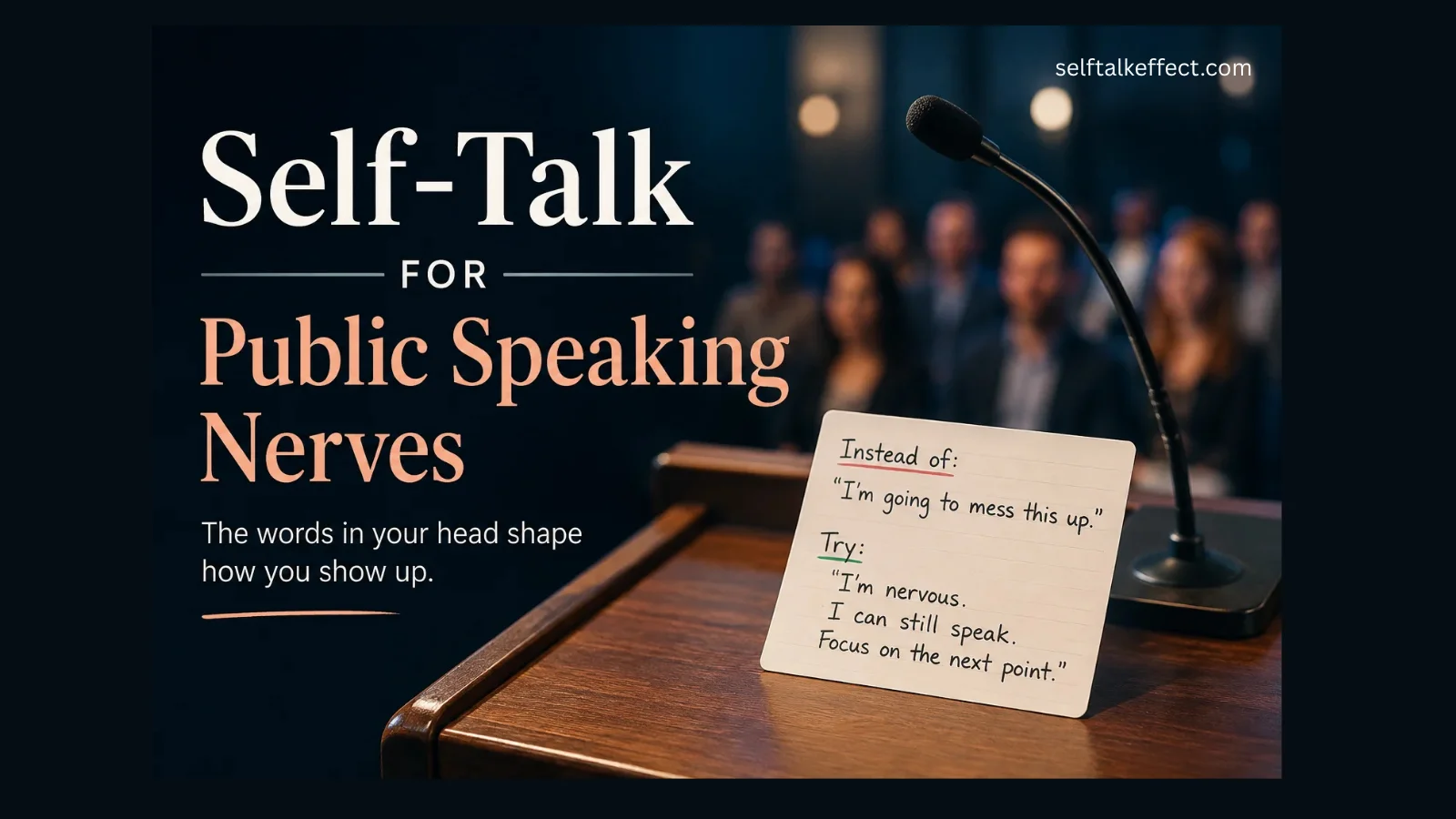
When I was working towards fixing my negative self-talk I thought the best way to do it was to pick a positive replacement, but I usually felt a little silly saying it, because it didn't sound like me. The real problem was the sentence I picked didn't always fit whatever I was going through. That's because self-talk isn't a mood you either have or don't have. It's a running commentary, and like any commentary, it can be edited.
Eventually I realized that the point isn't to force cheerfulness into a hard moment. It's to have a steadier sentence ready before the harsh one gets there first. I literally began to write down and collect words I could say in moments of negative self-talk.
Why it matters
The sentence you repeat after something happens becomes the mood you carry into what happens next. Miss a deadline and think "I always let people down," and that sentence doesn't just describe the moment, it sets the tone for the rest of your afternoon.
Miss the same deadline and think "I can flag this and adjust the plan," and you're in a completely different emotional state, even though the external facts haven't changed at all.
That's the entire mechanism. It's not about forcing positivity. It's about noticing which sentence is already running, and having a steadier one on hand to swap in.
Why it can feel hard
Positive self-talk gets a bad reputation because most of the advice out there hands you a generic affirmation that doesn't match the specific thing you're actually feeling. Telling yourself "I am capable of anything" while you're staring at a spreadsheet you don't understand doesn't land, because it isn't true to the moment, and some part of you knows it. The fix isn't abandoning positive self-talk. It's making the sentence specific enough to be believable.
A believable sentence acknowledges what's actually happening and still points you somewhere useful. That's the difference between a sentence that helps and one that just sounds nice.
Examples you can actually use
Here are steady, specific sentences for the situations that come up most often, organized by what's actually going on when the harsh version shows up.
After a mistake: "This is behavior, not identity. I can fix it and keep going." Notice this separates what you did from who you are, which is what makes it usable in the moment instead of just comforting in theory.
When self-doubt creeps in before something new: "Everyone here started before they felt ready. I'm allowed to be new at this." This works because it's true of literally everyone in the room, not just you, which takes the edge off the isolation that usually comes with imposter feelings.
When you're overthinking the same thing on repeat: "This thought doesn't need replaying again. I can pause here and decide." Overthinking feels productive because it's active, but it rarely produces a decision. Naming the loop is often enough to step out of it.
When you're putting something off: "Five minutes now changes the whole afternoon." Small and specific beats big and vague, because five minutes is a size your brain can actually agree to.
When you're anxious about something that hasn't happened yet: "I've handled harder things than this before." This one works because it's evidence-based. It's not hope, it's a fact you already have proof of.
When you're under pressure and about to react: "I can slow this down before I respond." This creates a half-second of space, and that half-second is usually the entire difference between a reaction you regret and a response you don't.
Apply the learning in small ways
Pick one situation from that list, the one that shows up most in your actual week, and write your version of that sentence somewhere you'll see it. Your phone lock screen, a sticky note, the notes app. The goal isn't to memorize six sentences. It's to have one ready the next time you catch the old one starting.
The sentence only works if it's specific to you. If "five minutes now changes the whole afternoon" doesn't sound like something you'd actually say, adjust the wording until it does. A sentence you don't believe won't interrupt anything.
Try this
The next time you catch a harsh sentence running, don't try to erase it. Just ask yourself: what would the steadier version of this actually say? You don't need it to sound inspirational. You just need it to be slightly more useful than the one that got there first.
Capture the takeaway
Positive self-talk isn't about forcing a good mood onto a bad moment. It's about having a specific, believable sentence ready so the automatic one doesn't get the only vote.
Your next step
If you haven't already, it's worth reading through the common negative self-talk patterns first, the ones that hide in reasonable-sounding phrases and rarely get questioned. Once you can spot those, these replacements start doing a lot more work.