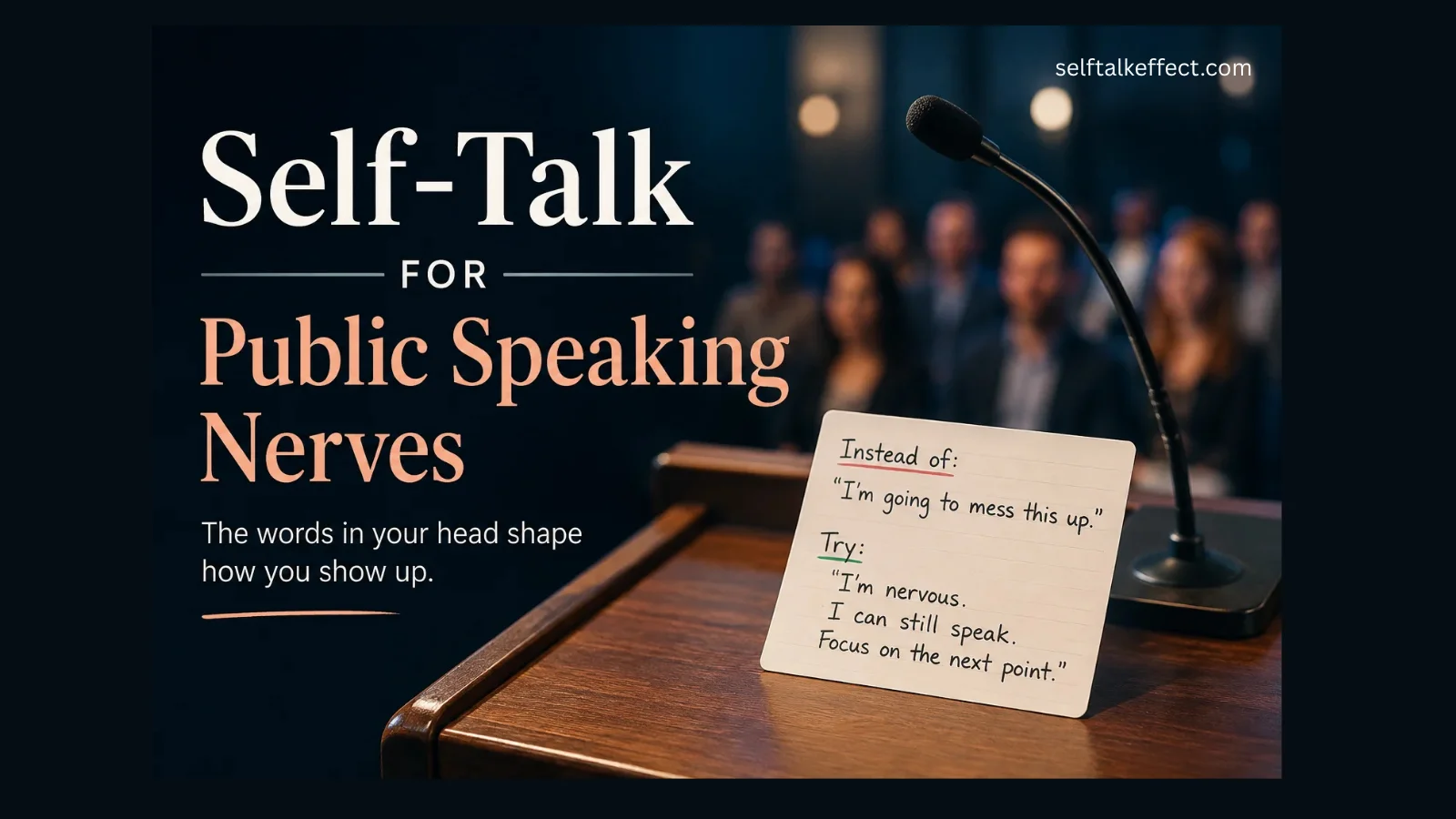
Most people believe their mood is shaped by what happens to them. Someone says something upsetting or a mistake happens and they feel like the event itself causes the reaction. But something important happens in the middle of that moment. Before the reaction, there is usually a sentence, you say something to yourself about what just happened, and it often appears so quickly that you barely notice it.
“Why did I say that?”
“They’re probably annoyed with me.”
“I knew this would happen.”
That sentence gives meaning to the situation. Once the meaning is assigned, your mood begins to shift. Your body reacts, your attention changes, and your behavior follows.
This is the core idea behind The Self-Talk Effect.
Your words influence your mood.
Your mood influences your actions.
Your actions influence your results.
Most people try to control their emotions directly. They try to calm down, stop worrying, or force themselves to feel confident. But emotions usually appear after something else has already happened inside the mind.
That “something” is the sentence you say to yourself and when the sentence exaggerates the situation, your reaction becomes stronger. When the sentence describes the situation more clearly, your reaction stays steadier.
Over time, the sentences you repeat most often become familiar. What feels familiar becomes automatic and automatic reactions create patterns. Those patterns shape the results you experience in everyday life.
Many people assume the sequence looks like this: Event → Emotion → Reaction
But there is usually a step in between. Event → Sentence → Emotion → Reaction
The sentence is where interpretation happens. Your mind explains what the situation means, and your body reacts to that explanation. This guide will help you notice those sentences and understand how different types of self-talk influence the way you respond to situations.
When you begin hearing your internal sentences more clearly, something important changes. You realize that the words inside your mind are not fixed facts. They are interpretations, and interpretations can be adjusted.
That small adjustment can change your mood, your behavior, and eventually your results. This is the foundation of The Self-Talk Effect, and honestly, it’s the tool I wish someone had handed me decades ago, rather than the version I had to work out slowly, situation by situation.
What This Guide Will Show You
Throughout this guide you will see several types of self-talk that commonly appear in everyday situations:
Reactive Self-Talk: The sentence that appears immediately after something happens.
Reset Self-Talk: Language that interrupts spirals after something goes wrong.
Emotional Regulation Self-Talk: Language that steadies your mood when feelings begin to escalate.
Instructional Self-Talk: Language that guides your next action.
These forms of self-talk often appear in sequence during real-life situations. Learning to recognize them helps you respond more deliberately instead of reacting automatically.
The first step is simple. Begin noticing the sentence that appears in your mind when something happens. Because that sentence often determines what happens next. Read the full guide available to download below.
Feel Free to Share This Guide
This guide was created to help people understand how self-talk influences everyday reactions. You are welcome to share it. If you believe someone else would benefit from reading it, please feel free to pass it along. Send it to a friend, share it with colleagues, post it in a community or group or include it in a newsletter. Attribution back to this site is welcome :)))
The goal of this guide is simple. To help more people become aware of the language they use with themselves and learn how to guide it more deliberately.
Thank you for reading and sharing this guide. The more people who understand how self-talk influences their reactions, the more people can begin using language to guide their actions rather than escalate their situations.